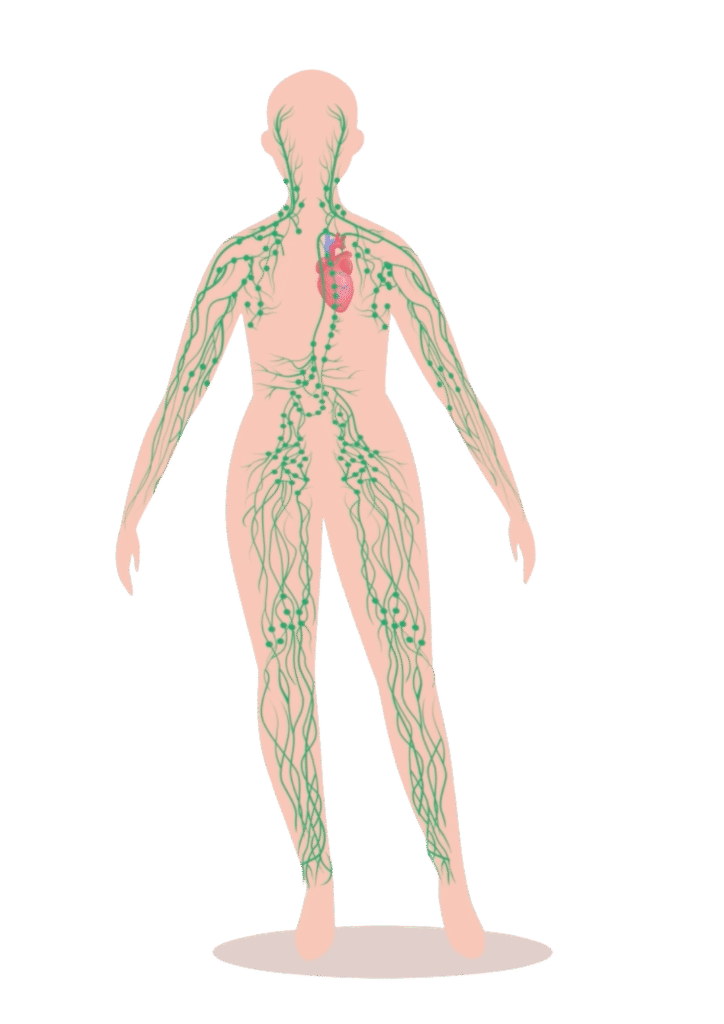
The main functions of the lymphatic system are helping fight infections and draining excess lymph fluid from tissues.
Lymph Vessels
A network of tubes that transport lymph fluid away from tissues and eventually back into the bloodstream.
Lymph Fluid
A clear, protein-rich fluid that carries waste products, cellular debris, and white blood cells throughout the body.
Lymph Nodes
Small glands positioned along the vessels that act as filters to trap harmful substances like bacteria and cancer cells.
Lymphedema
After breast cancer
Lymph nodes are often removed when getting breast cancer surgery. This disrupts the flow of lymph fluid, which can lead to swelling in the arm. Radiation treatment can cause further scarring that increase the risk of lymphedema.
Knowing the
Symptoms
Swelling
The main symptom of lymphedema is swelling. It can get worse during the day and over time the swelling will likely grow. In the beginning this can be felt by clothes and jewellery feeling tighter.
Aching
What for some is called subjective lymphedema. Even without visible swelling the body part can feel heavy and like the skin is tightening.
Skin changes
Lymphedema makes the skin more vulnerable to infection. The skin can become thickened, dry, and develop cracks where bacteria can enter.
Reduced mobility
It can become difficult to move, stretch and flex the joints in the affected area.
Pitting
When pressing on the skin a dent appears and takes a longer time to disappear.
Skin infections
The vulnerable state of the lymphatic system can cause both cellulitis and erysipelas which appears with warmth, soreness, swelling and redness. If you spot this - contact your doctor.
Understanding
The stages of lymphedema
Stage 0
In stage 0 the lymphatic system is strained and has difficulty transporting the lymphatic fluid. There is no swelling yet but a sense of tightness or tingling can occur. In this stage early intervention can prevent the onset of chronic lymphedema.
Stage 1
In this stage the arm starts to swell occasionally. When swelling occurs the affected area will be prone to pitting. Elevation can help relieve the swelling. The lymphedema can at this stage be controlled and prevent further progression.
Stage 2
The lymphedema is more stagnant and the swelling can not be relieved by elevation only. The patient can experience reduced mobility, tightness and the tissue becomes firmer. There will be risks of infection in the skin and overall discomfort. At this stage the swelling can only be reduced slightly.
Stage 3
At this point the arm is severely swollen and the tissue has hardened. The skin cracks easily and is prone to infections because of the high concentration of lymph fluid in the area. Reduction of the swelling is minimal at this stage.
Learn why
Early detection matters
The earlier lymphedema is detected the better odds for recovery and stopping progression there is. At Cacto Health we aim to detect lymphedema earlier to give breast cancer survivors a chance to act for a better quality of life.